Abstract Lace Trim Patterns Set
A Designer’s First Glance: Delicate, Bold, and Surprisingly Versatile
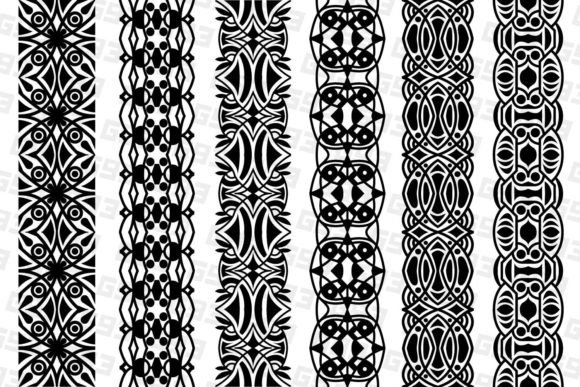
When I opened the Abstract Lace Trim Patterns Set, my first thought wasn’t “pretty”—it was “usable.” These aren’t fussy, over-rendered florals. They’re ornamental lace tape designs with clean negative space, rhythmic repetition, and a confident black-on-white simplicity that reads instantly—even at thumbnail size. The seamless patterns feel intentional, not automated: each floral element breathes within its own rhythm, balancing intricacy with restraint. This isn’t lace for Victorian doilies—it’s lace for modern makers who want elegance without fuss.
Real-World Test: Embroidering a Linen Kitchen Towel for My Boutique Shelf
Last week, I prepped a batch of custom linen tea towels for my small shop—hand-stitched hems, natural dye accents, and one unifying detail: a 3-inch-wide band of lace trim along the bottom edge. I chose two patterns from the Abstract Lace Trim Patterns Set to test. Why? Because towel embroidery needs clarity at arm’s length, durability through weekly washes, and visual harmony with raw fabric texture. The black-only palette worked perfectly: high contrast against off-white linen, zero color-matching stress, and immediate sophistication. No need to layer threads or adjust saturation—just load, hoop, and stitch.
Where It Shines (and Where It Asks for Thought)
The Abstract Lace Trim Patterns Set excels in projects where rhythm and refinement matter more than literal realism:
- Custom apparel: A subtle lace band on the cuff of a cotton sweatshirt adds quiet luxury—no competing with logos or heavy graphics.
- Baby embroidery: On organic cotton onesies or burp cloths, the clean lines read as gentle, not busy—ideal for minimalist nursery decor.
- Embroidered patches: Each pattern scales well; when stitched onto twill, the satin stitch edges hold definition without fraying.
- Holiday gifts & wedding keepsakes: Think monogrammed pillow covers or linen napkin hems—timeless, tactile, and quietly elevated.
- Etsy listings & craft fair products: The high-res JPGs translate cleanly into printable mockups, helping buyers visualize the handmade product before purchase.
Use With Care: Practical Embroidery Realities
This set isn’t magic—and it shouldn’t be treated like it is. Here’s where attention pays off:
- Small hoop sizes: Some motifs include fine interior loops. If your smallest hoop is under 4”x4”, test one pattern first—you may need to split or simplify sections manually.
- Textured or stretchy fabric: On terry cloth towels or lightweight knits, stabilizer choice is non-negotiable. A medium-weight cutaway works best for the stitch density in tighter floral clusters.
- Dark or heavily printed backgrounds: Since these are black-only designs, they’ll vanish on charcoal or navy unless you embroider white thread instead—or use them as cut-out appliqué templates.
- Curved surfaces (caps, curved apron pockets): The seamless flow helps, but avoid placing tight corners directly over seams or crowns. Let the pattern breathe across flat planes first.
- Frequent-wash items: While the design itself is durable, dense fill stitches in tiny floral centers can pucker over time if stabilizer is skipped. Always test on scrap fabric washed and dried once before final production.
What It Does for Your Brand—and Your Buyers
Using the Abstract Lace Trim Patterns Set subtly shifts how customers perceive your work. That black-on-linen towel didn’t just sell faster—it drew compliments about “intentional design” and “thoughtful details.” Why? Because lace trim signals care: time spent selecting, testing, and placing something decorative *with purpose*. It builds trust—not through flash, but through consistency and finish.
For Etsy sellers and small shop owners, this set supports brand cohesion across product categories: same lace motif on a baby blanket hem, a tote bag strap accent, and a holiday ornament sleeve. That repetition becomes visual shorthand—your signature touch, recognizable even without a logo.
And for digital product sellers? These are strong design assets. As Illustrations and Graphics, they’re flexible beyond embroidery—think laser-cut wood templates, sublimation overlays, or SVG files for Cricut users. Just confirm licensing terms before bundling them into commercial digital packs.
Designer Notes You’ll Actually Use
Before stitching your first machine embroidery design from this set, do these six things:
- Test on scrap fabric *identical* to your final project—including same stabilizer and thread colors.
- Check stitch density in tight areas: zoom into the JPG and look for overlapping fill stitches—if they blur together visually, simplify or reduce density in your software.
- Confirm hoop size compatibility: measure the longest continuous repeat unit in your chosen pattern and compare it to your machine’s max hoop dimensions.
- Inspect small details in both black-and-white and grayscale mockups—what reads clearly on screen must also read clearly when stitched at 1/3 scale on a cap brim.
- Compare performance on light vs. dark fabric backgrounds using simple digital overlays—this reveals where contrast (or lack thereof) will make or break the finished product.
- Verify licensing: since this is sold as a digital embroidery file set, double-check whether resale of physical embroidered items is permitted—and whether attribution is required for digital redistribution.
Final Thought: Not Just Lace—A Design Decision
The Abstract Lace Trim Patterns Set won’t shout. It doesn’t need to. Its strength is in precision, adaptability, and quiet confidence—the kind that makes a handmade product feel considered, not casual. Whether you’re stitching a personalized gift, building a craft business, or sourcing reliable embroidery project assets for clients, this set earns its place in your library not because it’s flashy, but because it works—consistently, cleanly, and with unmistakable craft intelligence.